

Khaukhadaad
One record from the guest's order to the kitchen ticket, the bill, the stock movement and the day's cash.
A restaurant's day is a chain of hand-offs: the guest decides, the waiter writes, the kitchen cooks, the cashier bills, the store room runs down, the owner counts. This keeps that chain on one record. An order is taken once and read by everyone, and the stock, the cash and the day's numbers follow from it rather than being reconstructed afterwards.
- Project
- Khaukhadaad
- Type
- Restaurant POS and guest ordering
- Built for
- Restaurants, cafes, quick-service counters and food courts
- Includes
- Multi-outlet groups and white-label operators
- Line of work
- 03ERP & Business Systems
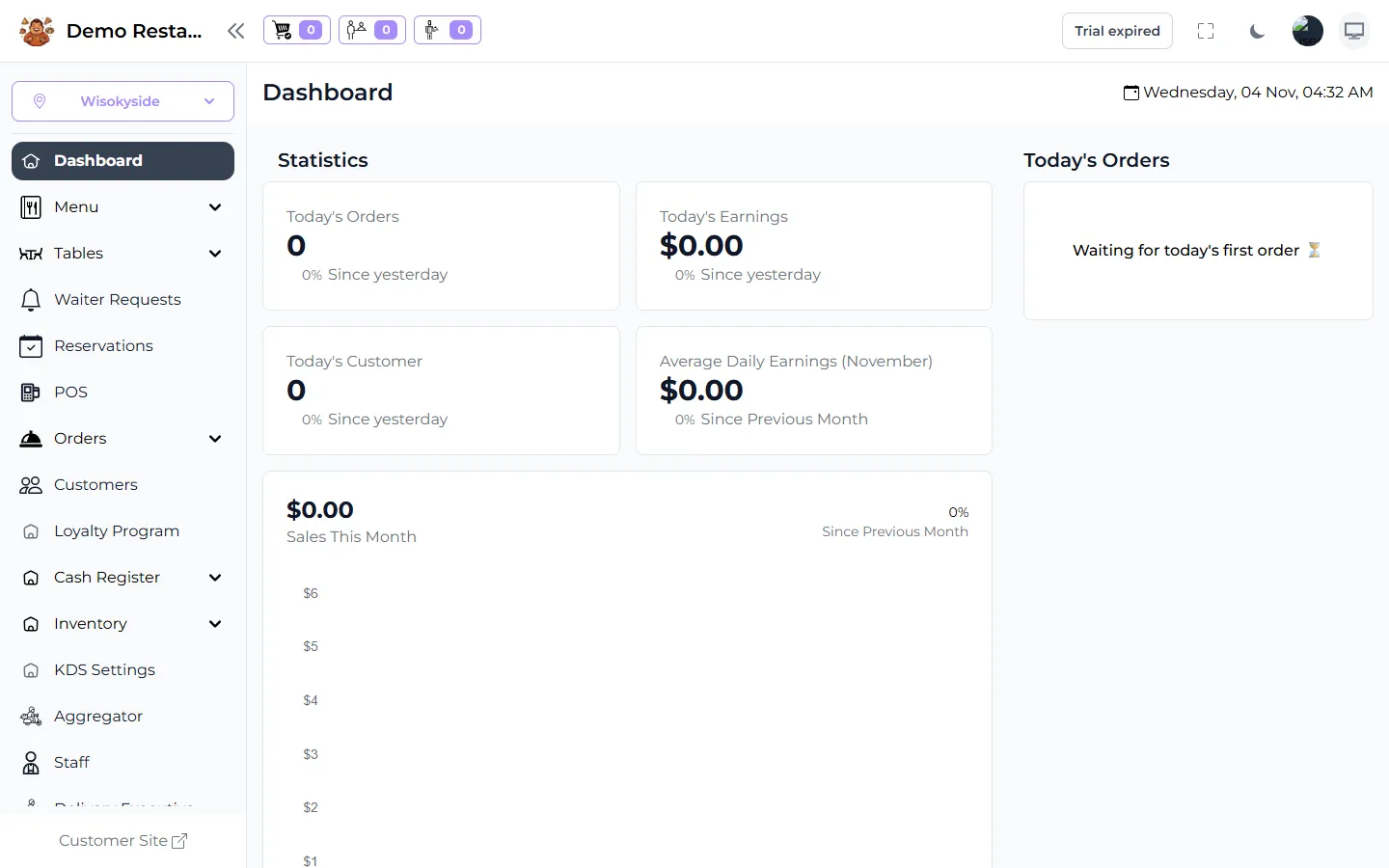
Khaukhadaad in use.
Order once, read everywhere
At a table, staff open the table, build the order, send it to the kitchen and settle the bill. At the counter the till handles walk-ins, phone orders and pickups with the same menu, taxes and discounts.
Guests can order from their own phone by scanning the code on the table, or from a self-service kiosk at the entrance. All of it lands in the same order list.
- A branded guest page per restaurant: menu with photographs, dietary markers and preparation times
- Dine in, pick up or delivery, with table booking by date, party size and time slot
- A call-waiter button that reaches the floor in seconds
A kitchen that is not guessing
Every confirmed order produces a kitchen ticket with the table, the items, the options and the notes. Staff move dishes through In Kitchen, Food Ready and completed; tickets can be split by station, cancelled with a recorded reason, and reprinted.
A kitchen display screen replaces the paper at the pass, and a separate order board shows guests what is being prepared and what is ready for pickup.
The floor, the store room and the till
Areas, tables with seat counts, live occupancy, a table layout view and a printed code for every table. Reservations take date, party size, meal period and time slot, with special requests and guest history.
Recipes link each dish to the ingredients it consumes, so stock moves with the orders instead of being guessed at month end — which is what makes food cost, plate margin and usage reports mean anything.
Every shift opens a register with a counted float, records cash in, cash out and safe drops, and closes with a counted drawer and the variance. X and Z summaries print for the shift.
Why one record is the point
Dine-in, takeaway, delivery, ordering from the guest's own phone and ordering from a kiosk share one menu, one set of prices, one kitchen and one set of reports.
- One order, one record — nothing is retyped and nothing drifts
- Answers the owner's real questions: which dish makes money, what was wasted, who cancelled what, when the rush hits
- Money that reconciles at the end of every shift
- A second outlet opens on the same way of working, with its own tables, staff and settings